On Seeing More in Scripture Than What We Bring
In 1957, as a college freshman, R.C. Sproul heard the captain of his football team quote a verse from Ecclesiastes, and Sproul’s life changed forever. The verse was Ecclesiastes 11:3:
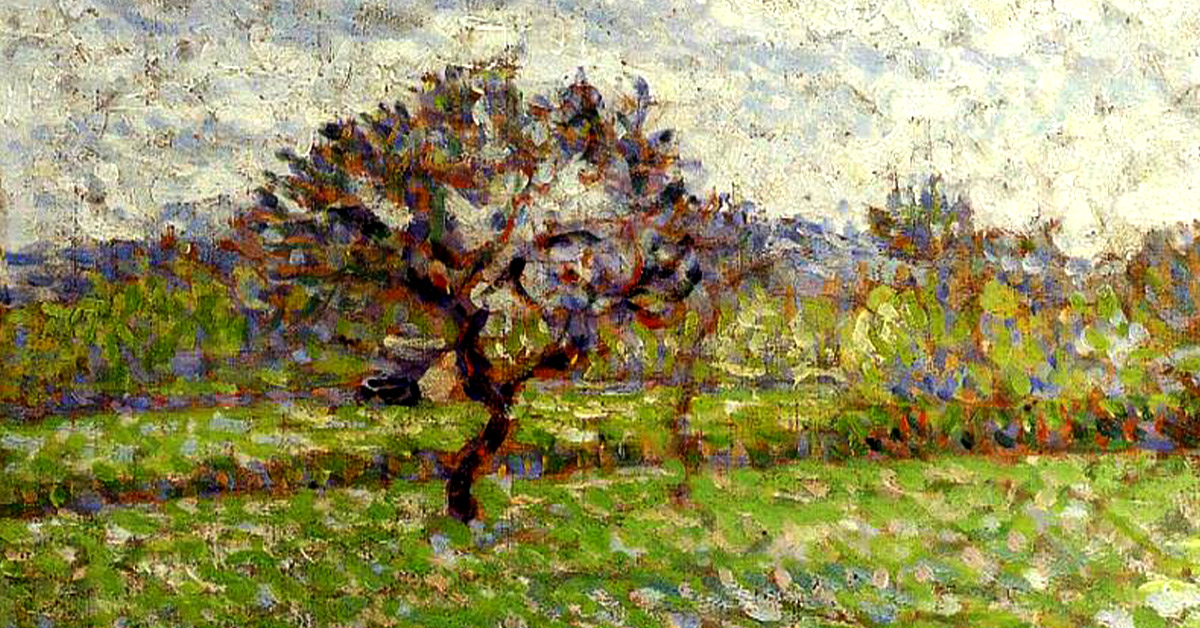
“If clouds are full of water, they pour rain on the earth. Whether a tree falls to the south or to the north, in the place where it falls, there it will lie.”
To me, these words hold no real spiritual punch. They simply babble on about obvious and humdrum things. Yet when Sproul heard them, he said they “pierced my soul.”
Sproul later admitted this verse to be an odd source of epiphany, joking that he might be the only person in history converted by that text.
So why? What was it about that pedestrian text that thumped him so hard in the heart?
Simple. Sproul says: “I saw myself as that tree . . . inert, useless, and rotten.”
After football practice, Sproul dashed to his dorm, fell to his knees, and begged God for mercy. The next day he picked up a Bible and began reading it from the beginning.
(Mis)Reading Ecclesiastes?
Whatever path he took to get there, Sproul found God and I celebrate that.
Still, his path is revealing.
When Sproul read about the fallen tree in Ecclesiastes 11:3, he saw himself. But Ecclesiastes 11:3 is not about the self. Qohelet, the author of Ecclesiastes, does not intend for the reader to identify as the tree. Qohelet is simply riffing on the unpredictability of life. He’s not talking about the reader at all, he’s talking poetically about the reader’s world. Namely, much of life happens outside of our control.
Sproul took interpretive liberties when he identified himself as the fallen tree. Thinking the passage was a divine comment on his own inner condition, he fully admits, was a naïve reading. But the reading moved him deeply and he couldn’t let go of it.
I understand that. Sometimes a text hits us in strange, almost magical ways, and I applaud Sproul’s openness to what might be the peculiar proddings of the Holy Spirit. We believe the Bible a living scripture, so we do well to let the words move us how they do.
The danger comes when we lift those personal and idiosyncratic insights out of ourselves, then shape them into a doctrine for everybody else; the danger comes when we extract those epiphanies meant for our own heart, then use them to ground theology for all hearts.
Sproul’s epiphany wasn’t what Qohelet intended with his text, nor was it the result of sound exegesis. Rather, it was merely the outcome of a special moment, one where the state of his unique psyche crashed into Qohelet’s striking analogy.
Sproul wasn’t seeing something Qohelet was trying to say, he was only seeing himself in a mirror. He didn’t “discover” God’s view of him in the verse, no, he dragged this view of himself with him to the text.
This matters because where we start shapes where we go. Our first readings can echo through each successive reading. For Sproul, the message that came through to him was that “God plays for keeps,” a phrase packed with assumptions about power, control, and dominance. No wonder Sproul, after his encounter with Qohelet, walked the halls of his dorm late into the night, unable to sleep, terrified by what he called his “virgin encounter with the God of the Old Testament.”
Sproul went on to use this personal conversion story as the narrative foundation of his entire theology—including his understanding of salvation. Sproul saw salvation like this:
Salvation is to be saved from God.
Jesus (the son) saves us from God (the father).
We are rotten and God is enraged at our rottenness. God’s wrath is coming for all rotten people. Christ came to rescue us from this worst of all catastrophes: God’s wrath.
While I reject this view of salvation, what interests me here is the train of thought Sproul rode to get there. He begins with a view of himself (inert, useless, and rotten), globalizes that view of himself to everyone, then constructs a view of atonement from that globalized view.
A Strange Coincidence:
It just so happens that Ecclesiastes also launched my own faith.
Sometime before I reached adulthood—and before I found God—I developed what I would call a heightened sensitivity to futility. Everything seemed meaningless.
While my peers crammed for college, chased careers, or started families, I struggled to muster the gumption to even go to school, or to complete basic life tasks. I stared at the floor while my classmates leapt into their bright futures. Yes, I knew their pursuits were good, but none of those pursuits seemed worth the great labor required, or worth the anxiety incurred.
I was depressed, but I also had something more than Depression. The ferocious force that gripped me was what Albert Camus called “the Absurd.” Camus knew that to be human meant to exist in a paradox: to ache for meaning in a universe that could not provide it.
We go on anyway, acting as if life had great meaning. We pretend things matter more than they do. Camus called this awkward acting a “pantomime,” one that “makes silly everything that surrounds us.”
Consider this pitiable portrait he paints: “A man is talking on the telephone behind a glass partition; you cannot hear him, but you see his incomprehensible dumb show.” Camus meant that, whatever the man was talking about on the phone, nothing could be meaningful enough to justify the emotional intensity of the man’s gestures and affect. Whether the man displayed happiness, hatred, anger, or euphoria, nothing matters enough to merit such moods.
Likewise, from the shadows of my ghastly awakening, I couldn’t see much sense to any of the treasures I watched my peers pursue.
Everything Camus wrote—about the meaninglessness of life and about the falsity of humans—perfectly framed the haunt of my own angsty state. In school, I devolved into a sardonic class clown—a real pain in the ass. I got a kick out of exposing the absurdities of life, and mocking anyone who took things too seriously.
Nothing was safe from my nihilistic deconstruction—even sex. Yes, even as a teenager, bullied by hormones, I saw sex—and all desire—as a dupe and a gimmick. Whatever satisfaction one finds in the satiation of a desire lasts not much longer than a sneeze, then the desire returns again.
Even having children didn’t seem worth the trouble. Begetting children, the way I saw from my dark hole, meant bringing more people into the same arena of absurdity I was now waking up to.
To my embarrassment, these dark epiphanies also left me feeling superior. They don’t know what I know, I told myself. I really thought everyone else marched in a parade of soft lies, and that only Albert Camus and I, Dan Kent, dared face the deep and difficult truths of existence.
That was all nonsense, of course. I was not the superior one. I was the weak one, the sensitive one, the one who couldn’t even carry on with simple tasks in the face of a little absurdity. Many of my peers held the same angst in their hearts. But they were simply more mature, or more ambitious, or more capable of accepting their situation for what it was and, unlike me, were able to move on to make the most of their situation. They could work despite the dark. I was the needy one who needed light.
Finding Light
The very last place I thought I’d find light was the Bible. To my mind, the Bible was a primary source of those soft lies, lies to which I watched humanity march. Yep, I was one of those boobs who—without having actually read the Bible—thought the Bible not much more than a woobie for the weak, a crutch for the broken, a comforting writ that mumbled sweet things to fragile people.
Then one day I decided to actually take a peek at the book itself, and I lucked into Ecclesiastes (2:17):
“…I hated life, because the work that is done under the sun was grievous to me. All of it meaningless, a chasing after the wind” (2:17).
Yes, a chasing after the wind. That’s exactly how I saw life: everything absurd with nothing worth the trouble. I thought life amounted to a marketplace of desires, each desire flaring up only to burn down to nothing, all of which was followed by death—the final flare-out-to-nothing.
What kind of religious book is this, I thought, and so I read on, carried forward by the accuracy of its dark diagnosis.
Long before Camus there came Qohelet.
Like Sproul, Ecclesiastes lit a fire in me to read more. What else might I find in this Bible?
Eventually I came to the Book of Jeremiah, where the “two ways” poked me in the eye:
“I am setting before you the way of life and the way of death” (Jeremiah 21:8).
When I first read that, a prick of light punctured my darkness. I felt new nodes in my brain power on. Maybe what I thought of as reality was little more than the musty basement of a much larger house. Maybe what I knew of as life was merely one path in life—and it wasn’t even the path of life, but rather the path of death.
The mere idea of an alternative path gave me levity. It meant that my own dark epiphany might be incomplete—and a partial epiphany can be worse than no epiphany at all.
My laments morphed into laughter as I saw, more and more, how my entire existential crisis had emerged from a half-sighted assessment. My whole sad-clown persona made perfect sense if the world were a meaningless circus. But the world is not a circus. The circus is but one possible destination in a much larger two-ways world.
The implications of all this unfolded fast. Everyday choices I once considered banal, I now saw as potential catalysts for new levels of spiritual experience. The living God invited me into his living dance, and I now floated forward with fresh purpose: to find this God, more and more, to pursue this better path the best that I can.
Whatever little glimpses of God’s light I found felt joyous, in-and-of themselves. And then that joyous glow haloed outward, challenging all my frowny intuitions, softening my heart, and improving my sentiments about the rest of life and creation.
How could I still think, for instance, that having children meant forcing them against their will into an arena of absurdity? No, having children meant begetting them into a realm where they, too, might stand before the two ways, and might choose to share in divine goodness. Having kids meant sharing this joyous light with more potential children of God.
My entire thought-life relaxed. I no longer strained to find something meaningful in life. The two ways broke into my days and gave latent meaning to everything. In a short amount of time—months, maybe—I went from starving-for-meaning to stumbling-drunk-on-meaning.
One Map, Different Journeys
I feel camaraderie with Sproul. For both of us, our romance with God’s word started in Ecclesiastes. But, wow, did our paths diverge.
Sproul’s First Date with the Bible terrified him and left him restless.
My own First Date with the Bible exhilarated me and left me hopeful.
The truth is, our paths diverged long before those first encounters with Qohelet. The deviation began back at the luggage rack, back when we first packed our bags for our journeys ahead.
Sproul brought a deep sense of self-loathing with him to the text. Ecclesiastes didn’t tell Sproul he was the fallen tree. No, Sproul already saw himself—deeply and sincerely—as inert, useless, and rotten. Given that baggage, it’s no surprise that the God Sproul found was angry and threatening.
Me, I dragged a great sense of despair to the Good Book, and Qohelet lifted that angst out of me so I could see it in the light. Ecclesiastes gave shape to my despair about the emptiness of life, then pointed me beyond that emptiness toward the God who was the only possible source of meaning great enough, and lasting enough, to fill that void.
Unlike Sproul, the despair I carried wasn’t about me, but about life. Qohelet didn’t convince me that I was meaningless, he confirmed my intuition that everyday life was meaningless, in-and-of itself. Qohelet affirmed my intuition that the things people spent their lives chasing—money, ambition, pleasure, achievement—could never carry the weight of meaning we place on them.
Straightening Out the Warps
Like me, Sproul’s encounter with scripture prompted him to keep reading. That’s good because our first readings are almost always flawed. We each lug a bag of junk to the text, and we’re all guilty of reading it through our own distinctive warp. We do well to keep reading, always with humility, so that the text might reshape whatever distortions we hold.
Over the years, the Bible has thumbed and kneaded my own heart and mind in many ways. It has repeatedly exposed and mocked my ferocious individualism; it has humbled my naïve optimism about human nature; it has gently summoned me out of my anxious isolation and goaded me into community with other believers; it has contested my implicit materialism and opened my mind to the spiritual realm—and also to the workings of the Holy Spirit, which I’ve chronically downplayed or denied.
Many are the flaws I’ve brought to God’s word.
Sproul, too, has opportunities for correction.
To begin with, he is not a dead tree. If humanity were truly inert, useless, and rotten at its core, the incarnation would make little sense. God becoming fully human tells us something profound about the irreducible goodness of a human being. And the God of our scripture does not merely tolerate us, God delights in us (Zephaniah 3:17).
Sproul’s erroneous view of humans as dead trees then misguides his understanding of God’s wrath.
Sproul is right that “the wrath that is to come” will cause great suffering and destruction; the New Testament testifies to such terror.
Sproul is flat wrong, though, about the source of that wrath.
When the New Testament speaks of God’s wrath, especially in the Book of Revelation, the calamity does not get pinned on God. No, the true maestro of the-coming-wrath is the Beast (see: Revelation 12:12, 12:17, 13:7, 17:6).
Satan.
God judges, yes—but the terror of that judgment is not God lashing out in rage. It is God giving evil over to itself. This is why John tells us that Jesus came, not to defeat us, and not to thwart God, but to defeat Satan (1 John 3:8).
Sproul never makes that connection. Shaped by his shame and self-loathing, he saw God as the threat, and he saw salvation as the rescue from that threatening God.
When we come to Scripture believing that we are nothing but rot, we will find a God who confirms that fear. And when we come believing that we are broken but beloved, we will find a God who heals rather than terrorizes.
Yes, sin is real, and, yes, salvation is necessary. But salvation is not God rescuing us from himself. It is God rescuing us from sin, from death, from Satan, and from the false stories we tell ourselves about ourselves.
Final Thoughts
It’s true, wherever a tree falls, there it will lie. And if the tree trunk fractures from its roots, that tree can only ride slowly down the course of rot and decay, until it finishes its forced deconstruction and returns to soil, or burns away to ash in a passing blaze.
A tree is wholly subject to the whims of circumstance, a mere slave to nature’s decree. It cannot protest, object, or fight back. It can only consent.
I don’t know what dark thoughts convinced Sproul of such sad powerlessness, but Sproul was wrong. You, me, and R.C. Sproul, we are not trees. We are not powerless to circumstance. We can protest and object. We can fight against all apparent fate. We carry God’s breath in our chest and can command our vessel toward a great variety of directions.
Really, that’s the whole point of Ecclesiastes: much of this ostensibly meaningless life storms onward, just outside of our control. But not everything lies out of reach. We have some agency. And how we use that little flicker of sayso, well, that’s also where we find meaning.
This is not to say that everything we do suddenly has meaning simply because we do it from this special nexus of agency. No, only some things matter.
So, which things can have meaning?
The answer to that question is exactly what Qohelet wants to teach us:
“Now all has been heard;
here is the conclusion of the matter:
Fear God and keep his commands.”
(Ecclesiastes 12:13)
Sproul and I both applaud Qohelet’s conclusion, but how we understand his conclusion differs greatly. As for fearing God, Sproul will understand that fear from the perspective of a fallen tree. His fear—which kept him up all night terrified—related to God’s wrath. Sproul’s fear was the powerless fear of an inert, useless, and rotten thing.
I don’t see humans as impotent, dead trees, so how I understand the fear of God looks nothing like Sproul’s understanding. For me, the fear of the Lord relates, not to God’s wrath, but to God’s love. The fear of God is not about my powerlessness, it’s about my power. It’s the heavy fear that I might squander the great power God has given me. Really, the fear of God is simply the ultimate form of the fear I carry with me in all my love relationships: that I will live unworthy of that love, that my life will not reflect the value of that love.
God, the one who loves me most, the one who suffered and died for me, represents the ultimate love that I might squander. For that reason, God’s love is the greatest source of relational fear. When I contemplate this loving God, who gave me breath, a mind, and existence itself, and when I consider my life, that’s when the fear of God surfaces. I fear I will mistreat that perfect love. And when I do mistreat it—when I sin—I tremble, not at God’s wrath, but at my own neglect of this most precious thing. I don’t think: what might God do to me in his wrath? No, I ask myself: Did you not appreciate having existence? Were you not grateful for your agency? You were given the breath of a God who loves you, and what did you do with it?
Sproul has no problem fearing God in his way—what else can an inert, useless, and rotten thing do but fear?
I don’t see how Sproul can affirm Qohelet’s second conclusion: Keep God’s commands.
Keeping God’s commands requires a great deal more than what an inert, useless, and rotten thing can do. Only a dynamic, empowered, and wise being with agency can set themselves to obeying God. And it’s down that path of obedience, of becoming the person God wants us to become, that we truly find the great meaning our hearts desire.
Dan Kent