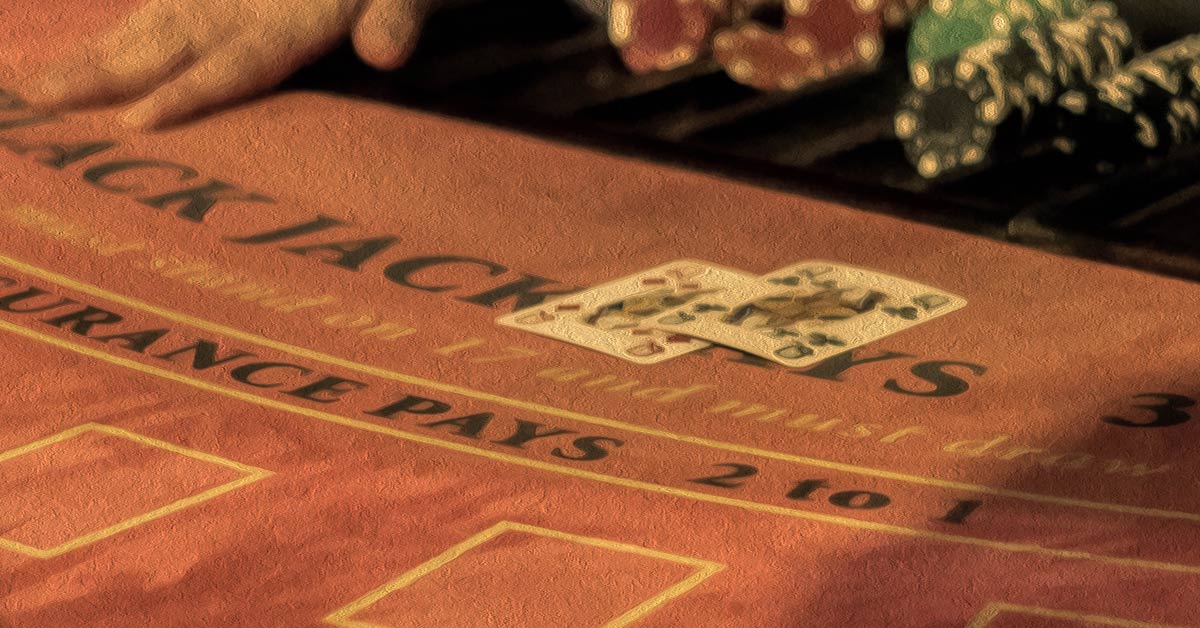
Everyone Has a System
The True Story Behind: DEALER WINS
You wanna know how I kept my hundred-dollar bills so crisp and flat? I’d take five or six bills and place them in the pages of a Bible commentary, then stack other commentaries on top: Romans on top of Matthew, on top of John, on top of Exodus, and so forth. After a day or so, those hundred-dollar bills would come out flat and crispy.
Just about every day I brought home a new stack of hundreds—I worried I might run out of commentaries! I’d wake up just before noon, eat an egg sandwich, grab $400, then drive to Mystic Lake Casino. The valets knew me by name and parked my truck with a smile and a “good luck, buddy.”
I’d go in, find my table, take off my coat, then lay my money down for the dealer. He’d gather my cash then push my chips to me, across that felt tabletop.
The card dealers all knew me, the pit bosses knew me, and some of the gambling addicts began to know me, though they tended to collapse into themselves as soon as the dealer dealt.
Those players, man. Some women. Some men. Some Asian. Some black. The dealer would flick the cards all around, and they’d each stare at their cards, check the dealer’s card, then consider all the cards around them. They either waved off the dealer, or called for another card, or they doubled their bet, each move calculated according to their complicated system. “I have a system,” they’d say.
I had a system, too, but those folks never seemed to win—not by the time they left.
Me, I never seemed to lose.
They hated me.
For a short time, blackjack was just the thing for me. My girlfriend had dumped me and my good friend had fired me from his company—both acting with good reason: she was not the gal for me, and corporate life at my friend’s company, well, it suffocated lungs inside of me I didn’t even know I had.
Beating the Casino
Anyway, I didn’t know what to do with my life. Blackjack was easy and I set my mind to it for a while. Most of those gamblers built their systems by “playing the numbers.” To them, the game was all about probability.
And probability does seem a prominent force in the game. If you cannot calculate basic odds, you’re sunk. While that’s all true, what does it tell you that blackjack dealers—employed by the casino—often coach players and give them probability tips? It tells me, whatever role probability plays in the game, probability is not enough to beat it. If winning at blackjack was possible, I assumed it would require more than simply “playing the odds.”
Maybe someday, when we know each other better, I will share my system with you. For now I’ll just say most of those blackjack players focused on the wrong things.
For instance, the systems of most of these players centered exclusively on rules for playing. When X happens, take another card, when Y happens do not take another card, and so forth. I never met a player who had rules for quitting—other than “I’ve run out of money.” Knowing when you’ve lost is obvious, but what about knowing when you’ve won? In a game statistically tilted against players, not having a plan for stopping, while ahead, will inevitably result in heavy losses.
Making rules for playing is easy. Rules for stopping, not so. This is because winning feels so good, and you could always win the next hand. Because you could always win the next hand, you keep playing—why wouldn’t you? Casinos leverage this nebulous dilemma against players all day long. There’s no clear line built into the game that tells us when enough is enough. Drunk on the thrill of winning, players keep playing, until they eventually lose—or, worse than losing, they win big first, only then to lose it all back.
Any effective system must have an exit plan. Most gamblers don’t have one.
More serious than failing to have an exit plan, most blackjack players fail to see beyond probability. All day long, intelligent people butterfly to the table to push in their chips. These are folks with a good grasp of math and statistics, some of them scientists, some accountants. What these otherwise smart players don’t realize is that their knack for math is leading them right into an epistemic trap. They are mice being lured to danger. The bait of the trap, the cheese if you will, is the game-of-probability offered before them. No wonder casinos coach players on probability; no wonder casinos gush when players boast about their “system.”
Players feel like they are in control because they make decisions, but it’s those very decisions that sink them—casino dealers make no decisions.
Yes, in the short run, on any given deal, the game swings on probability. In the long run, though, it hinges on the dealer’s upside down card. The true situation is hidden to the player, yet they push their chips in. The game requires players to make choices before everything is known. They make financial commitments with inadequate information. Free choices made with poor knowledge, or inadequate data, will always lead to ruin, eventually.
The real nemesis in blackjack is the upside-down card. The unknowable. Everything else—the card counting, the progressive betting, all those statistical strategies—it’s all noise.
Once I saw this, that the game was about more than probability, I was able to plan accordingly. That, plus an effective exit plan, fueled a fantastic winning streak. I don’t remember exactly how much I won—nobody does careful accounting when the money comes easy—but it was at least a few thousand bucks.
Regardless, after about six weeks, I left the casino and didn’t go back. While I liked the stacks of cash, I really didn’t enjoy dwelling with other players in the grip of their gambling trance. And the pit bosses creeped me out, over-friendly and always watching me close. More than that, the game occupied my brain in an empty sort of way. Once I figured out the gimmick to it all, well, I just sort of stared into various abysses as the cards were dealt. I could feel my brain softening like an old banana as I swiveled aimlessly on the stool, stacking, then re-stacking, my chips.
There’s a bigger game out there, and getting consumed by small games, like blackjack, even when you win, can sabotage your play at those larger contests.
. . .
DEALER WINS
at the blackjack table
everyone has
a system
card counting
cutting thin
chip stacking
progressive betting
cutting thick
riding streaks
the dealer flicks the cards
one card up for each of us
and one card up
for the house
another card up for each of us
then one card hidden
upside down
for the house
thwip thwip thwip
the hands are dealt
aces and small cards
kings and queens
and jacks
“split it”
“hit that”
“double-down”
colorful cards all around
while one card sits
upside-down
resting hidden before
the dealer
everyone has a system
at the blackjack table
“I have a system”
they say
then go on and on
telling us all about it
they WIN a hand
“see it works,” they say
then they lose
one or two
“that’s to be expected”
and then a WIN
then they lose
lose
lose
WIN
lose
“it works over time”
lose
WIN
lose
lose
until they’ve lost
down to a point
where they stop promoting
their system
they
stop
talking
as
they are whittled down
down
down
to their last
chip
and they push it in
the dealer deals
Two Kings!
the player grins
the dealer winks
and shows a ten
then flips his hidden card
and it’s an Ace
Blackjack!
the dealer wins
then takes the player’s
final chip
who nods and stands
dabs his cigarette
in a tray of ash
pushes in his stool
whispers away
I presume
out of the casino
and into that much larger
harsher
game
where I hope he has a better
system
because
in that game
all the dealer’s cards
are hidden
. . .
From my second collection of poetry: “The Fundamentals of Skywriting.” Available here for a short while longer: https://amzn.to/2OTAPja
Dan Kent